
Natural Farming in Telangana
Concept of Natural Farming
Concept
Natural Farming is a chemical-free farming system rooted in Indian traditions and enriched with modern understanding of ecology, resource recycling and on-farm resource optimization. It is an agroecology-based diversified farming system that integrates crops, trees and livestock with functional biodiversity.
Natural farming emphasizes on-farm biomass recycling, biomass mulching, the use of on-farm cow dung and cow-urine-based formulations, maintaining soil aeration and avoiding synthetic chemical inputs.
Natural farming aims to reduce dependency on purchased agricultural inputs and can provide opportunities for cost-effective farming, employment generation and sustainable rural development.
Scenario
Many states in India have promoted natural farming and developed different models for farmers. Natural farming adoption is developing gradually, with increasing awareness about soil health, biodiversity, sustainable agriculture and efficient use of local resources.
Natural Farming Practices
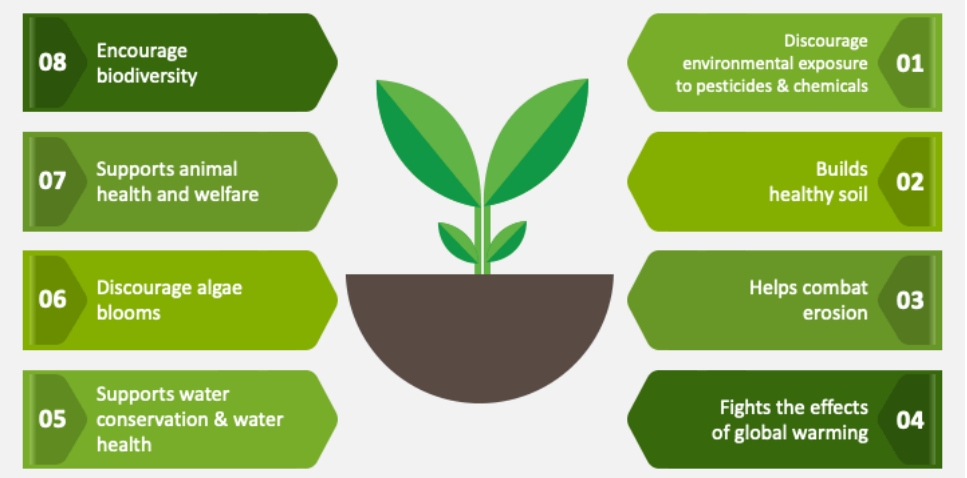
Natural farming aims to restore soil health, maintain biodiversity, support animal welfare, efficiently use natural and local resources, and encourage ecological balance. It is an ecological approach in which farming systems work with natural processes.
Key Natural Farming Practices
- Reduced dependence on external agricultural inputs
- Use of local and suitable seed varieties
- On-farm microbial formulations for seed treatment, such as Bijamrita
- On-farm microbial inoculants such as Jivamrita for supporting soil biological activity
- Cover crops and biomass mulching using green and dry organic matter
- Mixed cropping and crop diversification
- Integration of trees into farming systems
- Botanical approaches for pest management, including locally prepared formulations
- Integration of livestock, including suitable indigenous cattle where appropriate
- Water and moisture conservation
Aims and Objectives of Natural Farming
- Preserve natural flora and fauna
- Restore soil health, fertility and biological activity
- Maintain diversity in crop production
- Efficiently utilize land and natural resources
- Encourage beneficial insects, animals and soil microbes
- Promote suitable local livestock breeds
- Encourage natural and locally available resources
- Reduce agricultural input costs where feasible
- Improve farm economics and resilience
Natural Farming in India
Natural farming is being promoted through different initiatives across several Indian states. Approaches differ according to local climate, soil conditions, crops, farming systems and government programmes.
Major Natural Farming Practices
Natural farming practices may include:
- Use of local seed varieties
- Microbial seed treatment such as Bijamrita
- Microbial formulations such as Jivamrita
- Cover crops and biomass mulching
- Mixed cropping and crop diversification
- Tree integration
- Livestock integration
- Water and moisture conservation
- Biodiversity management
Natural farming works with ecological processes and biodiversity. Its objectives include improving soil biological activity, maintaining diversity, supporting responsible livestock integration and promoting efficient use of natural resources.
Major Objectives of Natural Farming
- Preserve natural flora and fauna
- Restore soil fertility and biological life
- Maintain crop diversity
- Efficient utilization of natural resources
- Promote beneficial insects, animals and microbes
- Promote appropriate local breeds for livestock integration
- Use locally available natural resources
- Reduce dependence on purchased inputs
- Improve farm economics
Increasing agricultural input costs can affect farm profitability. Natural farming approaches seek to reduce dependence on purchased inputs by encouraging locally available resources, crop diversification, biomass recycling and ecological farming practices.
Natural farming is an agroecology-based diversified farming system integrating crops, trees and livestock. Practices such as biomass mulching, crop diversification and locally prepared biological inputs are commonly associated with natural farming approaches.
The suitability and results of natural farming practices can vary according to crops, soil, climate, farm size and local conditions. Farmers should adopt practices appropriate to their individual farming systems.
Definition of Natural Farming
Natural farming is commonly described as an agroecology-based farming approach that emphasizes ecological processes, biodiversity, local resources and reduced dependence on synthetic agricultural inputs.
Natural farming applies ecological principles to agriculture by working with biodiversity and natural processes within and around farms.
Concept of Natural Farming
Natural farming is an agroecology-based approach that integrates crops, trees and livestock while encouraging biodiversity and efficient use of natural resources. It aims to support soil health, farm resilience, environmental sustainability and farmer livelihoods.
Features of Natural Farming
- Encourages soil biological activity and biodiversity
- Uses organic matter and biomass to support soil health
- Encourages biological inputs prepared from locally available resources
- Promotes crop diversification and mixed cropping
- Can integrate livestock with farming systems
- Encourages water and moisture conservation
- Promotes ecological approaches to pest management
- Reduces reliance on synthetic chemical inputs
- Encourages recycling of farm-generated biomass
Principles of Natural Farming
Healthy soil biological activity is an important foundation of sustainable agriculture. Natural farming emphasizes maintaining soil cover, crop diversity, minimum soil disturbance where appropriate, livestock integration, biomass recycling and ecological pest management.
Organic residues such as crop biomass and other suitable farm-generated materials can be recycled within farming systems. Pest management can emphasize agronomic practices, biodiversity and locally prepared botanical approaches.
Commonly discussed natural farming practices include Beejamrit, Jivamrit, mulching, moisture management and ecological plant protection.
Specific Principles of Natural Farming
- Diversified cropping system-based agriculture
- Recycling naturally available nutrients
- Recycling on-farm generated biomass
- Use of locally developed plant, animal and microbial resources
- Farming practices adapted to local climate, soil, pests and cropping patterns
Scope of Natural Farming
Natural farming approaches are being explored and practiced in different parts of India and other regions of the world. Farming systems vary according to local ecological, climatic and socio-economic conditions.
In India, different natural farming models have developed around principles such as local resource utilization, biodiversity, crop diversification, biomass recycling and reduced dependence on external agricultural inputs.
Importance of Natural Farming
Natural farming can contribute to sustainable agricultural development by focusing on soil health, biodiversity, efficient resource use and reduced dependence on purchased inputs. It can also encourage diversified farming systems and support the resilience of rural communities.
Benefits of Natural Farming
- Soil Health: Encourages biological activity, organic matter recycling and ecological soil management.
- Resource Efficiency: Promotes efficient use of locally available resources and farm-generated biomass.
- Biodiversity: Crop diversification and ecological practices can support biodiversity on farms.
- Farmer Economics: Reduced dependence on purchased inputs may contribute to lower production costs in suitable farming systems.
- Environmental Sustainability: Natural farming emphasizes ecological processes, soil health, biodiversity and responsible resource management.
Cattle-Based and Non-Cattle-Based Natural Farming
Livestock can play an important role in integrated farming systems. Where suitable, cattle can contribute farm-generated resources such as manure and urine for farming practices. Integration of livestock with crops can also support nutrient recycling and diversified farm systems.
Current Scenario of Natural Farming in India
Natural farming is being promoted through different programmes and initiatives across several states in India. The scale and adoption of natural farming can change over time as programmes develop and more farmers participate.
Natural Farming in Telangana
Telangana has a diverse agricultural landscape, making soil health, water management, crop diversification and sustainable farming important areas for farmer development. Bujjamma Goshala Trust promotes awareness of natural farming and sustainable agricultural practices among farming communities.
Through farmer awareness, sustainable agriculture initiatives and PGS-India-related certification support, the Trust aims to encourage farmers to explore environmentally responsible farming systems.
Supporting Sustainable Farming
Bujjamma Goshala Trust works to promote awareness about natural farming, organic agriculture, sustainable rural development and farmer support in Telangana.
Farmers interested in learning more about natural farming and certification-related initiatives can contact Bujjamma Goshala Trust.